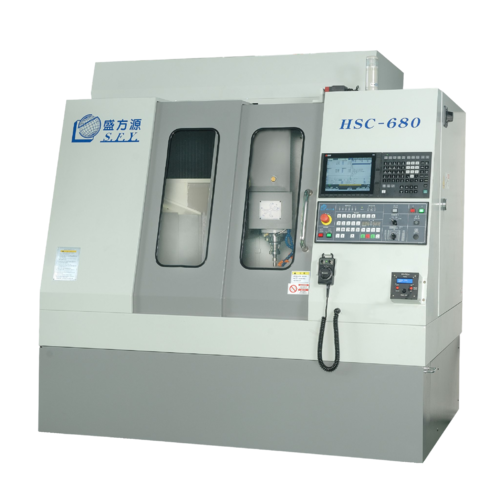
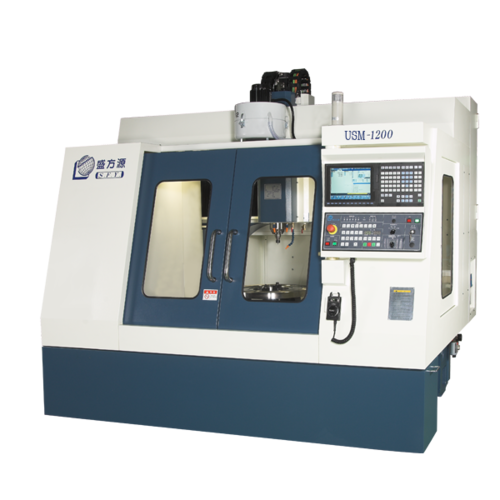
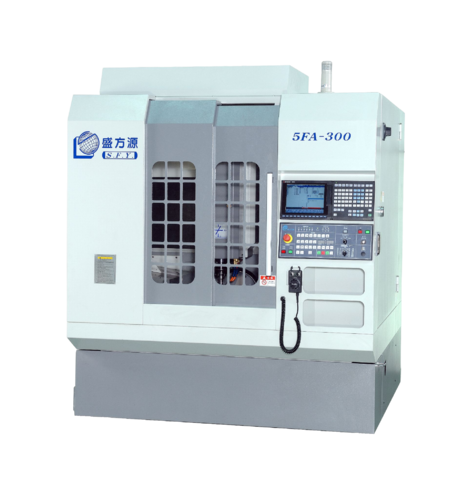
Eliminate Micro-Cracking and Edge Chipping! Stress-Free Cutting Solutions for Semiconductor Quartz and Advanced Ceramics.
Ultrasonic CNC: Technology & Application Snapshot
- Core Technology: High-Frequency Micro-Vibration Spindle Integration.
- Primary Advantage: Reduces cutting resistance by up to 50%, ensuring zero chipping and preventing sub-surface micro-cracks.
- Key Applications: Semiconductor processing (SiC, Si wafers, Quartz boats) and optical sapphire glass.
- Process Focus: Exclusive stress-free milling for hard, non-ductile, and brittle materials (Contrasted with ductile alloy machining).
SFY CNC Customized Semiconductor Ultrasonic Machining Centers perfectly integrate high-rigidity machine structures with advanced "High-Frequency Micro-Vibration Technology." This series is engineered to break the physical limits of traditional milling, serving as the ultimate solution for the world's most challenging, non-ductile materials. By minimizing cutting resistance, we empower the semiconductor and optoelectronics industries to achieve flawless yields on even the most fragile components.
Core Advantages of Ultrasonic Technology: Say Goodbye to Micro-Cracking
Traditional spindle CNC processing often causes quartz and advanced ceramics to shatter or scrap. Our ultrasonic technology fundamentally redefines cutting mechanics:
Superior Edge Integrity (Zero Chipping)
Continuous high-frequency micro-vibrations significantly eliminate residual stress during cutting. This prevents edge chipping and sub-surface micro-cracking, ensuring the structural integrity of fragile wafer carriers.
Ultimate Surface Roughness (Ra)
The pulsed cutting action of ultrasonic tools creates a smoother tool path, directly achieving optical-grade surface finishes and drastically reducing or eliminating time-consuming post-polishing processes.
Tool Self-Cleaning & Dust Extraction
Machining brittle materials produces highly abrasive ceramic dust. Ultrasonic vibrations prevent this dust from adhering to the tool; this "self-cleaning" effect avoids heat accumulation and significantly extends diamond tool life.
Target Applications: Dominating Hard and Brittle Materials
Our Semiconductor CNC Machining Center is strictly targeted at high-precision manufacturing sectors where material brittleness is the primary production bottleneck:
- Semiconductor and Optoelectronics: An essential platform for processing Silicon (Si) wafers, Silicon Carbide (SiC), quartz boats, sapphire glass, and high-precision optical lenses.
- Advanced Industrial Ceramics: Highly efficient drilling, milling, and profiling of precision ceramics like Alumina (Al2O3), Zirconia (ZrO2), and Aluminum Nitride (AlN) for high-tech insulators and wear-resistant parts.
Frequently Asked Questions: Ultrasonic CNC Machining
Why is ultrasonic technology required for ceramics instead of standard high-speed CNC?
Standard high-speed CNC relies on "brute force" spindle rotation, which easily shatters non-ductile materials like ceramics and glass. Ultrasonic technology generates tens of thousands of micro-vibrations per second, "micro-pulverizing" the material before contact. This reduces cutting resistance by up to 50% and fundamentally prevents micro-cracks.
How do ultrasonic micro-vibrations extend diamond tool life?
When cutting quartz or ceramics, abrasive dust quickly wears down diamond tools. The continuous micro-vibration of the ultrasonic spindle "shakes" this dust out of the cutting zone. This self-cleaning effect prevents the tool from overheating or clogging, significantly extending the operational lifespan of expensive tooling.
Can I use this ultrasonic machine for high-speed aluminum aerospace frames?
No. This ultrasonic series is dedicated exclusively to hard, brittle, and non-ductile materials (like Quartz, SiC, and Ceramics). If you need massive material removal rates (MRR) for ductile metals like aerospace aluminum alloys or EV chassis, we strongly recommend our HSC Double Column CNC Machining Center series.